Rechercher dans ce blog

Sunday, November 28, 2021

Christina Applegate on "hard" birthday after MS diagnosis - digitalspy.com

christina applegate

Steve GranitzGetty Images

Christina Applegate has shared a bittersweet message on social media to mark her 50th birthday after she was diagnosed with multiple sclerosis (MS).

The Dead to Me star took to Twitter on November 26 to ring in her milestone birthday with a message about how she is coping with the diagnosis.

Christina tweeted: "Yup. I turned 50 today. And I have MS. It's been a hard one. Sending so much love to all of you this day.

She continued: "Many are hurting today, and I am thinking of you. May we find that strength to lift our heads up. Mine currently is on my pillow. But I try".

christina applegate

Mike CoppolaGetty Images

Related: Dead to Me star Christina Applegate reacts to show ending after one more season

Many followers responded to the star’s tweet with words of encouragement and well wishes during this time.

One user said: "Happy 50th Birthday, I was diagnosed last summer at age 33. It's a real struggle but on the plus side has anyone noticed how all of us MS warriors are so frickin gorgeous. I hope you have a really lovely birthday. Sending lots of love your way."

Many other users shared their personal experiences with MS and offered advice on how best to cope with the condition.

clothing, lip, cheek, hairstyle, chin, forehead, eyebrow, eyelash, jewellery, style,

Tommaso Boddi/WireImage

Related: Dead To Me star James Marsden teases what's next in season 3

Her latest update comes after the actress, who also starred in Anchorman and Friends, shared the news on her Twitter on August 10 for the first time.

"Hi friends. A few months ago I was diagnosed with MS. It's been a strange journey. But I have been so supported by people that I know who also have this condition. It's been a tough road. But as we all know, the road keeps going. Unless some asshole blocks it," she tweeted.

She later added: "As one of my friends that has MS said 'we wake up and take the indicated action'. And that's what I do. So now I ask for privacy. As I go through this thing. Thank you".

Multiple sclerosis is an autoimmune condition that can affect the brain and spinal cord, according to the NHS, and can result in a range of potential symptoms, including problems with vision, arm or leg movement, sensation and balance.

For more information about MS, as well as help and support, visit the MS Society.

This content is created and maintained by a third party, and imported onto this page to help users provide their email addresses. You may be able to find more information about this and similar content at piano.io

Adblock test (Why?)


Christina Applegate on "hard" birthday after MS diagnosis - digitalspy.com
Read More

Saturday, November 27, 2021

Casey Affleck, 46, goes Instagram-official with actress Caylee Cowan, 23 - Page Six

Days after Page Six published first photos of Casey Affleck, 46, making out with actress Caylee Cowan, 23, the Oscar-winner has gone public with their relationship.

Affleck confirmed his romance with the young star in an Instagram post encouraging followers to donate blood to The Red Cross, referring to the beauty as “my love.”

“she is MY Love, and she ALWAYS shows up when it counts…,” Affleck declared, while explaining Cowan’s own hesitation when it came to donating blood.

“However, Caylee is usually unenthused about needles, blood, etc,” he went on, “and though she believably feigned nonchalance all the way to the donation location, once on the table with her sleeve rolled up, she was overheard quietly asking a staff member, ‘Is there a chance I might die?’

Casey Affleck and Caylee Cowan.
Affleck shared photos of the pair donating blood together.
Instagram

“The answer was no, of course. Donating is not only SAFE but PAINLESS and QUICK.”

His caption accompanied photos of the couple at a donation center together.

Cowan also uploaded her own photos from the visit while encouraging followers to donate.

Caylee Cowan.
Cowan, 23, was hesitant to donate, according to Affleck, 46.
Instagram

The “Manchester by the Sea” star was snapped Tuesday dropping off Cowan in Los Angeles, with the couple packing on the PDA for paparazzi photogs.

Cowan is known for her roles in “Sunrise in Heaven” (2019) and “Willy Wonderland” (2021).

Casey Affleck and Caylee Cowan.
The couple were photographed kissing in Los Angeles before going public with their relationship.
SL, Terma / BACKGRID

This latest post also officially confirms Affleck’s split from longtime girlfriend, actress Floriana Lima, 40. During their time together, the couple avoided the spotlight and rarely posted pics of each other to their respective social media pages.

The couple reportedly began dating in 2016, shortly after Affleck’s split from ex-wife Summer Phoenix.

Adblock test (Why?)


Casey Affleck, 46, goes Instagram-official with actress Caylee Cowan, 23 - Page Six
Read More

Empty Tables But Smiles Behind The Masks At San Diego Comic-Con 2021 - Bleeding Cool News

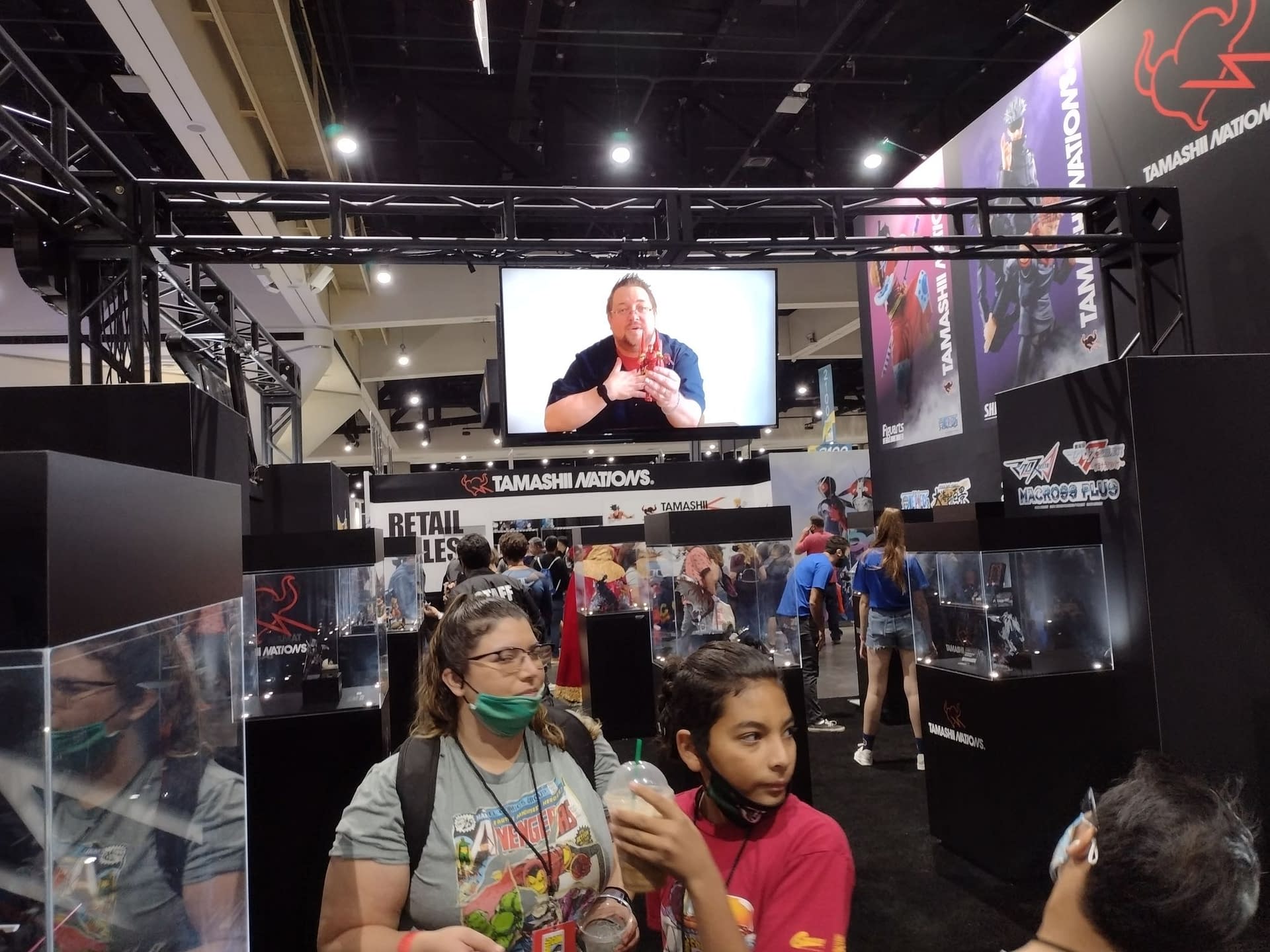
So this is the biggest discussion I have had with people at San Diego Comic-Con: Special Edition yesterday, specifically comic book creators and publishers. And it is one of appreciation for something they remembered but had partially forgotten. Because this year's show reminded them of the first shows when they started coming. The date of that show will differ depending on the person telling it. But there was a sense of recapture of innocence lost, when the show had more of a comics focus – or at least wasn't distracted by the bright shiny lights of Hollywood over in Hall H.

San Diego Comic-Con Special Edition
SDCC photo by Rich Johnston

San Diego Comic-Con: Special Edition was a show put on to give the fans something, anything, after a year with another cancelled San Diego Comic-Con in the summer. It was also the first major US show to run an event after the travel ban was lifted. But it was also held over Thanksgiving weekend in a time when many are understandably wary of the pandemic. It didn't book big TV or movie stars. The studios didn't come or put up big booths, for TV, toys, film or gaming. The big comic book publishers didn't come either, although some made it in spirit.

San Diego Comic-Con Special Edition
SDCC photo by Rich Johnston

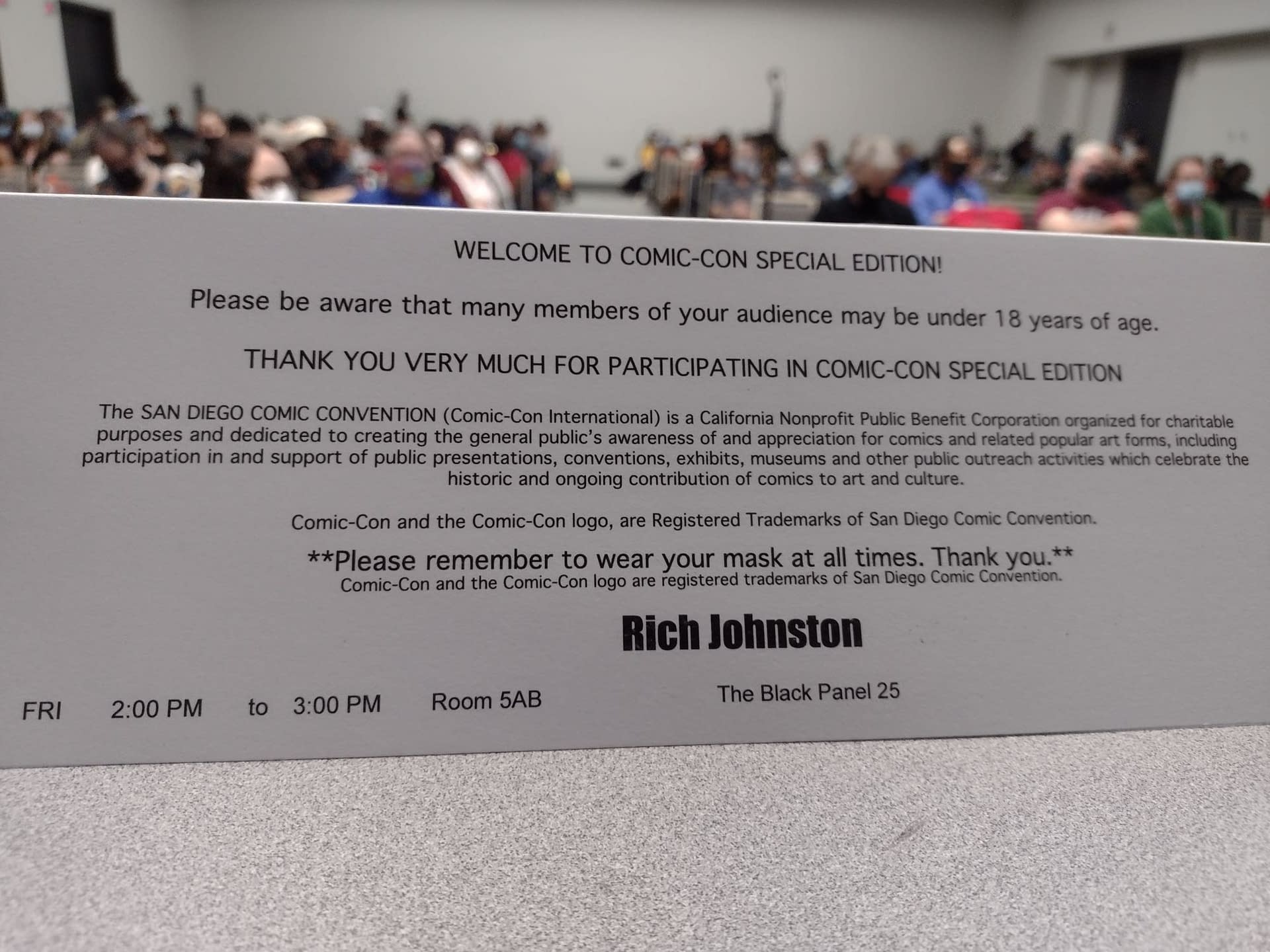
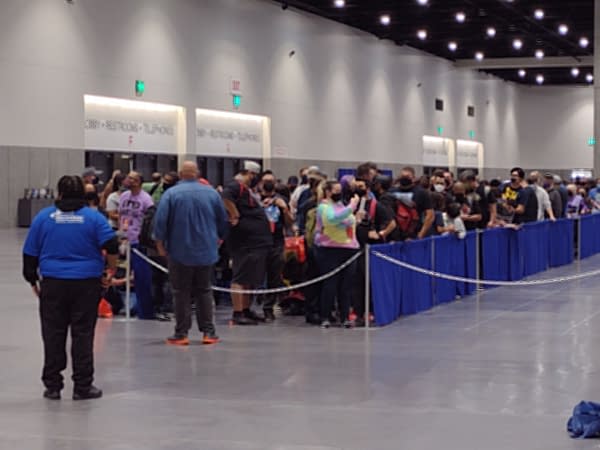
But somehow this didn't make it worse, it may well have made it better.  It was a fully masked (although they did slip at times), vaxxed, and ventilated event, and the most infectious thing going on was a sense of bonhomie. The faces may have been covered but the smiles could be seen in the creases of everyone's eyes. The gratitude to volunteers and staff was effusive. People had missed that, and given the chance they turned out in their… well, tens of thousands, certainly. You can see the lines in the videos here, there are so many.

San Diego Comic-Con Special Edition
SDCC photo by Rich Johnston

And rather than having hardcore attendees who had booked a year earlier by waiting in online queues, constantly refreshing their browser, there were still tickets available at the show. One could walk up, pay, and enter. Once you'd got through the big physical queues of course. I spoke to a number of publishers and creators who told me they chose to attend at the last minute, and found it easy. One even found their regular table still available for them, just one week ago. Previously tables and booths could only be applied for years in advance and with some egregious begging. Not so this time which meant while there were many familiar faces missing (it was so strange to see Randy Reynaldo's latest Rob Hanes Adventures without Bob The Angry Flower next door).  There were even some unused tables and several tables that had been booked, but that the creator has chosen not to attend, it seems, though of course there could be many reasons and it would be unwise to speculate.

San Diego Comic-Con Special Edition
SDCC photo by Rich Johnston

But it did help engender a more casual atmosphere, there wasn't the insane rush to get from one place to the next, and it seemed vendors appreciated that as well. Early reports are very encouraging on that front, and I am sure I will find out more in the Hyatt bar tonight. Because while this was a more relaxed and chilled comic con, it was still an insanely popular one, and maybe the lack of extraneous distraction focused people more on the joys of the show.

San Diego Comic-Con Special Edition
SDCC photo by Rich Johnston

Might the Big Proper Summer San Diego Comic-Con for 2022 be able to learn some lessons? With the pandemic still likely to be a thing then, is it possible that pulling back on some of the movie and TV stuff, to achieve a balance of material closer to what they had a few decades ago be something that might solve all manner of issues regarding crowds, social distancing and the like? Might San Diego Comic-Con: Special Edition have created a new happy medium, one that might entice a few more folks back – but not too many? We look forward to finding out.

Empty Tables But Smiles Behind The Masks At San Diego Comic-Con 2021

Enjoyed this? Please share on social media!

Adblock test (Why?)


Empty Tables But Smiles Behind The Masks At San Diego Comic-Con 2021 - Bleeding Cool News
Read More

Friday, November 26, 2021

The X Factor's Thomas Wells Dead at 46 After Horrifying Accident - E! Online

The world has lost a rising talent.

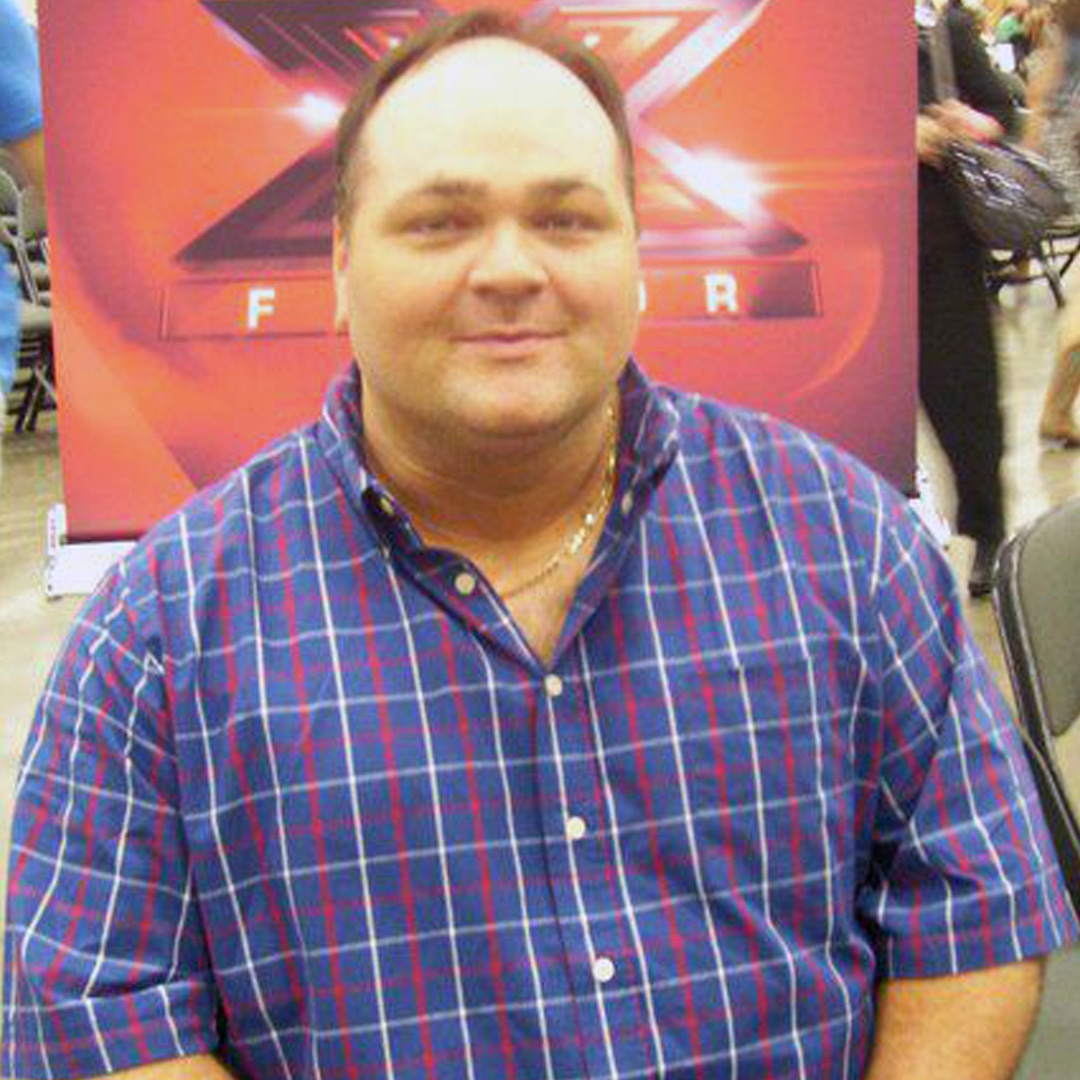
Thomas Wells, who competed on The X Factor among other reality shows, died on November 13, his wife Jessica Wells wrote on Facebook. He was 46.

"I feel like it's not real but I know it is," she shared in a heart-wrenching videotaped at his gravesite. "He was my best friend."

According to Jessica, who spoke to TMZ, Thomas died following an accident at the tire manufacturing plant he worked at in Oklahoma. While working, reports the outlet, part of his body got caught in an automatic conveyer belt and he was immediately rushed to a nearby hospital before being airlifted to another in Tyler, Texas.

"He was deteriorating really fast," she said in the Facebook video. "The lack of oxygen in his brain was causing his body to shut down and his organs and everything was just not working right. And there was something wrong with his stomach and and it kind of had this smell. It's hard to explain. It wasn't like overwhelming, but you could tell something was happening. His blood pressure was dropping really fast."

Adblock test (Why?)


The X Factor's Thomas Wells Dead at 46 After Horrifying Accident - E! Online
Read More

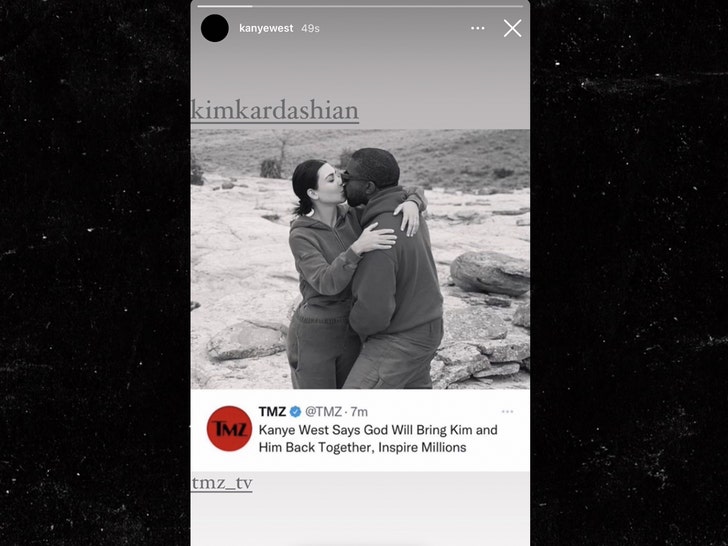
Kanye West Uses Kissing Pic with Kim Kardashian to Push for Reconciliation - TMZ

Adblock test (Why?)


Kanye West Uses Kissing Pic with Kim Kardashian to Push for Reconciliation - TMZ
Read More

Stephen Sondheim, Titan of the American Musical, Is Dead at 91 - The New York Times

He was the theater’s most revered and influential composer-lyricist of the last half of the 20th century and the driving force behind some of Broadway’s most beloved and celebrated shows.

Video player loading
In a never before seen interview, Stephen Sondheim sat down with The New York Times in June 2008 to talk about his life, career and accomplishments.

Stephen Sondheim, one of Broadway history’s songwriting titans, whose music and lyrics raised and reset the artistic standard for the American stage musical, died early Friday at his home in Roxbury, Conn. He was 91.

His lawyer and friend, F. Richard Pappas, announced the death. He said he did not know the cause but added that Mr. Sondheim had not been known to be ill and that the death was sudden. The day before, Mr. Sondheim had celebrated Thanksgiving with a dinner with friends in Roxbury, Mr. Pappas said.

An intellectually rigorous artist who perpetually sought new creative paths, Mr. Sondheim was the theater’s most revered and influential composer-lyricist of the last half of the 20th century, if not its most popular.

His work melded words and music in a way that enhanced them both. From his earliest successes in the late 1950s, when he wrote the lyrics for “West Side Story” and “Gypsy,” through the 1990s, when he wrote the music and lyrics for two audacious musicals, “Assassins,” giving voice to the men and women who killed or tried to kill American presidents, and “Passion,” an operatic probe into the nature of true love, he was a relentlessly innovative theatrical force.

The first Broadway show for which Mr. Sondheim wrote both the words and music, the farcical 1962 comedy “A Funny Thing Happened on the Way to the Forum,” won a Tony Award for best musical and went on to run for more than two years.

In the 1970s and 1980s, his most productive period, he turned out a series of strikingly original and varied works, including “Company” (1970), “Follies” (1971), “A Little Night Music” (1973), “Pacific Overtures” (1976), “Sweeney Todd” (1979), “Merrily We Roll Along” (1981), “Sunday in the Park With George” (1984) and “Into the Woods” (1987).

Stephen Sondheim in 1990. From his earliest successes in the late 1950s, when he wrote the lyrics for “West Side Story” and “Gypsy,” through the 1990s, when he wrote the music and lyrics for “Assassins” and “Passion,” he was a relentlessly innovative theatrical force.
Fred R. Conrad/The New York Times

In the history of the theater, only a handful could call Mr. Sondheim peer. The list of major theater composers who wrote words to accompany their own scores (and vice versa) is a short one — it includes Irving Berlin, Cole Porter, Frank Loesser, Jerry Herman and Noël Coward.

Though Mr. Sondheim spent long hours in solitary labor, usually late at night, when he was composing or writing, he often spoke lovingly of the collaborative nature of the theater. After the first decade of his career, he was never again a writer for hire, and his contribution to a show was always integral to its conception and execution. He chose collaborators — notably the producer and director Hal Prince, the orchestrator Jonathan Tunick and later the writer and director James Lapine — who shared his ambition to stretch the musical form beyond the bounds of only entertainment.

Mr. Sondheim’s music was always recognizable as his own, and yet he was dazzlingly versatile. His melodies could be deceptively, disarmingly simple — like the title song of the unsuccessful 1964 musical “Anyone Can Whistle,” “Our Time,” from “Merrily,” and the most famous of his individual songs, “Send In the Clowns,” from “Night Music” — or jaunty and whimsical, like “Everybody Ought to Have a Maid,” from “Forum.”

They could also be brassy and bitter, like “The Ladies Who Lunch,” from “Company,” or sweeping, like the grandly macabre waltz “A Little Priest,” from “Sweeney Todd.” And they could be exotic, like “Someone in a Tree” and “Pretty Lady,” both from “Pacific Overtures,” or desperately yearning, like the plaintive “I Read,” from “Passion.”

Friedman-Abeles/New York Public Library for the Performing Arts

He wrote speechifying soliloquies, conversational duets and chattery trios and quartets. He exploited time signatures and forms; for “Night Music,” he wrote a waltz, two sarabandes, two mazurkas, a polonaise, an étude and a gigue — nearly an entire score written in permutations of triple time.

Over all, he wrote both the music and the lyrics for a dozen Broadway shows — not including compendium revues like “Side by Side by Sondheim,” “Putting It Together” and the autobiographical “Sondheim on Sondheim.” Five of them won Tony Awards for best musical, and six won for best original score. A show that won neither of those, “Sunday in the Park,” took the 1985 Pulitzer Prize for drama.

Of the many revivals of his shows, three won Tonys, including “Assassins” in 2004, even though it had not previously been on Broadway. (It was presented Off Broadway in 1990.)

Hank Walker/The LIFE Picture Collection, via Getty Images

In 1993, Mr. Sondheim received the Kennedy Center Honors for lifetime achievement, and in 2015 he was awarded the Presidential Medal of Freedom by President Barack Obama. In 2008, he was given a Tony Award for lifetime achievement, and in 2010, in perhaps the ultimate show business accolade, a Broadway house on West 43rd Street, Henry Miller’s Theater, was renamed in his honor.

For his 90th birthday in March 2020, a Broadway revival of “Company” was planned, with a woman (played by Katrina Lenk) in the central role of Bobby, but it was postponed because of the coronavirus pandemic. The New York Times published a special section devoted to him, and a virtual concert, “Take Me to the World: A Sondheim 90th Birthday Celebration,” was streamed on the Broadway.com YouTube channel, featuring Broadway performers singing his songs.

Mr. Sondheim, who also maintained a home in Manhattan, a townhouse on East 49th Street, had been spending most of his time in Roxbury during the pandemic.

But he returned to New York this month to attend revivals of two of his musicals: on Nov. 14, for the opening night of “Assassins,” at the Classic Stage Company in Lower Manhattan, and the next night for the long-delayed first preview, since Broadway reopened, of “Company,” also starring Patti LuPone, at the Bernard B. Jacobs Theater.

Mr. Sondheim was “extremely” pleased by both productions, Mr. Pappas, his lawyer, said.

In addition to his theater work, Mr. Sondheim wrote occasional music for films, including the score for “Stavisky,” Alain Renais’s 1974 movie about a French financier and embezzler, and his song “Sooner or Later (I Always Get My Man)” for Warren Beatty’s “Dick Tracy” won an Academy Award in 1991. Six cast albums from his shows won Grammy Awards, and “Send In the Clowns” won the Grammy for song of the year in 1975.

With the exception perhaps of “Forum,” Mr. Sondheim’s shows had hefty ambitions in subject matter, form or both. “Company,” which was built from vignettes featuring several couples and their mutual single male friend, was a bittersweet reflection on marriage. “Pacific Overtures” told the story of the modernization of Japan from the Japanese perspective. “Sweeney Todd,” a bloody tale about a vengeful barber in 19th-century London, approached Grand Guignol in tone and opera in staging and scoring. “The Frogs,” which was first performed in the Yale University swimming pool in 1974 (with Meryl Streep in the cast) before it was revised for Broadway in 2004, blended the Greek comedy of Aristophanes with present-day political commentary.

Sara Krulwich/The New York Times

Mr. Sondheim liked to think of himself less as a songwriter than as a playwright, albeit one who wrote very short plays and set them to music. His lyrics, scrupulously literate and resonant with complex ideas or emotional ambivalence, were often impossibly clever but rarely only clever; his language was sometimes erudite but seldom purple. He was a world-class rhyming gymnast, not just at the ends of lines but within them — one of the baked dishes on the ghoulish menu in “Sweeney Todd” was “shepherd’s pie peppered with actual shepherd” — and he upheld the highest standards for acceptable wordplay, or at least tried to.

His 2010 artistic memoir, “Finishing the Hat” (the name was taken from a song title in “Sunday in the Park”; a follow-up, “Look, I Made a Hat,” came out in 2011), was in many ways a primer on the craft of lyric writing. In it, he took himself to task for numerous sins, including things like adding unnecessary adjectives to fill out lines rhythmically and paying insufficient attention to a melodic line. In the song “Somewhere” from “West Side Story,” for example, the highest note in the opening phrase is on the second beat, which means that in the well-known lyric — “There’s a place for us” — the emphasis is on the word “a.”

“The most unimportant word in the opening line is the one that gets the most important note,” he wrote.

In another example from “West Side Story,” he complained about a stanza from “America,” which was sung by a chorus of young Puerto Rican women.

“Words must sit on music in order to become clear to the audience,” he said to his biographer Meryle Secrest for her 1998 book, “Stephen Sondheim: A Life.” “You don’t get a chance to hear the lyric twice, and if it doesn’t sit and bounce when the music bounces and rise when the music rises, the audience becomes confused.”

In “America,” he added, “I had this wonderful quatrain that went: ‘I like to be in America/OK by me in America/Everything free in America/For a small fee in America.’ The little ‘for a small fee’ was my zinger — except that the ‘for’ is accented and ‘small fee’ is impossible to say that fast, so it went ‘For a smafee in America.’ Nobody knew what it meant!”

What most distinguished Mr. Sondheim’s lyrics, however, was that they were by and large character-driven, often probing explorations into a psyche that expressed emotional ambivalence, anguish or deeply felt conflict. In “Send In the Clowns,” for example, he couched the famous plaint about missed romantic chances largely in the language of the theater, because the character singing it is an aging actress:

Just when I’d stopped opening doors,

Finally knowing the one that I wanted was yours,

Making my entrance again with my usual flair,

Sure of my lines,

No one is there.

Chad Batka for The New York Times

In the title song for “Anyone Can Whistle,” he wrote from the point of view of a woman who found it hard to love:

Anyone can whistle,

That’s what they say —

Easy.

Anyone can whistle,

Any old day —

Easy.

It’s all so simple:

Relax, let go, let fly.

So someone tell me why

Can’t I?

I can dance a tango

I can read Greek —

Easy.

I can slay a dragon

Any old week —

Easy.

What’s hard is simple,

What’s natural comes hard.

Maybe you could show me

How to let go

Lower my guard.

Learn to be free.

Maybe if you whistle,

Whistle for me.

Over the years, many people theorized that “Anyone Can Whistle” was a cri de coeur by the author, though Mr. Sondheim denied it. “To believe that ‘Anyone Can Whistle’ is my credo is to believe that I’m the prototypical Repressed Intellectual and that explains everything about me,” he wrote in “Finishing the Hat.”

Still, it’s true that he lived a largely solitary romantic life for many years.

“I always thought that song would be Steve’s epitaph,” the playwright and director Arthur Laurents, who wrote the book for “Anyone Can Whistle,” as well as “West Side Story,” “Gypsy” and “Do I Hear a Waltz?,” told Ms. Secrest.

For a time in his 60s, Mr. Sondheim shared his Manhattan townhouse with a young songwriter, Peter Jones, and in 2017 he married Jeffrey Romley, who survives him, along with a half brother, Walter Sondheim.

Chester Higgins Jr./The New York Times

For all these reasons — the high-minded ambition, the seriousness of subject matter, the melodic experimentation, the emotional discord — Mr. Sondheim’s shows, though mostly received with critical accolades, were almost never popular hits. He suffered from a reputation that he didn’t write hummable tunes and that his outlook was austere, if not grim. For some of the same reasons, not all performers were suited to his shows, though over the years several well-known singers became his stalwart interpreters, among them Elaine Stritch, Angela Lansbury, Barbara Cook and Bernadette Peters.

Mr. Sondheim rarely gave audiences the fizzy, feel-good musical experience or the happily resolved narrative that the shows of his predecessors conditioned them to expect. He also didn’t give them the opulent spectacle, the anthemic score or the melodramatic storytelling that became the dominant musical theater style of the 1980s and ’90s with the arrival from Britain of Andrew Lloyd Webber’s megahits “Cats” and “Phantom of the Opera,” and Alain Boublil and Claude-Michel Schönberg’s “Les Misérables” and “Miss Saigon,” followed by the corporate productions of Disney.

Of the shows for which Mr. Sondheim wrote both music and lyrics, his first, “Forum,” had the longest Broadway run at 964 performances; his second, “Anyone Can Whistle,” lasted nine. “Merrily We Roll Along,” a famously problematic adaptation of the Kaufman and Hart reverse-chronology play about how idealistic young artists grow cynical as they age, closed after just 16. But even his successes were barely successful. Most of his Broadway shows, in their initial runs, failed to earn back the money it cost to put them on.

Sara Krulwich/The New York Times

“I have always conscientiously tried not to do the same thing twice,” Mr. Sondheim said, reflecting on his career in an interview with The New York Times Magazine in 2000, when he turned 70. “If you’re broken-field running, they can’t hit you with so many tomatoes. I certainly feel out of the mainstream because what’s happened in musicals is corporate and cookie-cutter stuff. And if I’m out of fashion, I’m out of fashion. Being a maverick isn’t just about being different. It’s about having your vision of the way a show might be.”

Stephen Joshua Sondheim was born on March 22, 1930, in Manhattan, and lived first on the Upper West Side. Herbert Sondheim, his father, was the owner of a dressmaking company; his mother, the former Etta Janet Fox, known as Foxy, worked for her husband as a designer until he left her, when Stephen was 10. He was sent for a time to military school, and later to the George School in Pennsylvania, but until he was 16 Stephen, her only child, lived mostly with his mother, with whom he had a troubled relationship throughout his life. (His father remarried and had two more sons.)

In the years following his parents’ separation, Mr. Sondheim recalled for his biography, his mother treated him precisely as she had her husband: flirting with him sexually on the one hand, belittling him on the other. As an adult, Mr. Sondheim supported her financially; nonetheless, in the 1970s, the night before she was to have heart surgery, she wrote a letter to her son and had it hand delivered. It read, in part, “The only regret I have in life is giving you birth.”

His mother was, nonetheless, responsible for the most formative relationship of her son’s life. She was a friend of Dorothy Hammerstein, whose husband was the lyricist Oscar Hammerstein II; their son Jamie became friends with young Steve, and when the Hammersteins moved to a Pennsylvania farm, Stephen, who had begun playing the piano at 7, went for a visit and stayed for the summer.

His mother subsequently bought a home nearby, and Stephen was so often at the Hammersteins’ that he was thought of as a family member. Hammerstein himself became a surrogate father and mentor — “It was because of my teenage admiration for him that I became a songwriter,” Mr. Sondheim wrote in “Finishing the Hat,” although he later assessed Hammerstein as a lyricist of soaring ability but often flawed work. Hammerstein brutally criticized the boy’s first musical, written at the George School, as “the worst thing I’ve ever read,” adding: “I didn’t say that it was untalented, I said it was terrible. And if you want to know why it’s terrible, I’ll tell you.”

Sara Krulwich/The New York Times

An afternoon-long tutorial followed, teaching him, by Mr. Sondheim’s account, more about the craft than most songwriters learn in a lifetime. Hammerstein laid out a path of writing exercises for him: Adapt a good play into a musical; adapt a flawed play into a musical; adapt a story from another medium into a musical; and, finally, write a musical from your own original story. This the young Mr. Sondheim did, a project that carried him through his graduation from Williams College in Massachusetts, where he complemented his theater work with serious composition study under Robert Barrow, an intellectually rigorous specialist in harmony, from whom Mr. Sondheim gleaned the lesson, as he put it, “that art is work and not inspiration, that invention comes with craft.” Mr. Sondheim would later study independently with Milton Babbitt, the avant-garde composer.

Mr. Sondheim’s first professional show business job was not in the theater at all; through the agency representing Hammerstein, he was hired to write for a 1950s television comedy, “Topper,” about a fussbudget banker haunted by a pair of urbane ghosts. (Much later, Mr. Sondheim wrote a whodunit film script, “The Last of Sheila,” with the actor Anthony Perkins; it was produced in 1973 and directed by Herbert Ross.) By the ’50s he had become a connoisseur of word games and puzzles, and an inventor of elaborate games. From 1968 to 1969, he created cryptic crosswords for New York magazine.

His affinity for theatrical misdirection and mystery was acknowledged by his friend, the playwright Anthony Shaffer, who based the cunningly vengeful cuckold in his play “Sleuth” partly on Mr. Sondheim. (The play was once tentatively titled “Who’s Afraid of Stephen Sondheim?”)

Mr. Sondheim was in his early 20s when he wrote his first professional show, a musical called “Saturday Night,” which was an adaptation of “Front Porch in Flatbush,” a play by Philip G. and Julius J. Epstein. He got the job, to write both words and music, after the composer Frank Loesser turned it down. The show was scheduled to be presented in 1955, but the producer, Lemuel Ayers, died before he had completed raising the money for it, and the production came to a halt. The show was not presented until 1997, by a small company in London; it subsequently appeared in Chicago and finally had its New York premiere in 2000, Off Broadway at the Second Stage Theater.

Mr. Sondheim was loath to take either of his first Broadway gigs, “West Side Story” and “Gypsy,” because he felt he was a composer, not only a lyricist — “I enjoy writing music much more than lyrics,” he confessed in “Finishing the Hat.” But he agreed to both on the advice of Hammerstein, who told him that he would benefit from working with the likes of Bernstein; Laurents, (who wrote the book) and the director Jerome Robbins, in the first instance, and from writing for a star like Ethel Merman in the second, even though it was she who had wanted a more experienced Broadway hand, Jule Styne, as the composer.

Only once after “Gypsy” would Mr. Sondheim write lyrics for another composer: an unhappy collaboration with Richard Rodgers, “Do I Hear a Waltz?,” based on Laurents’s play “The Time of the Cuckoo.”

Sara Krulwich/The New York Times

Mr. Sondheim was asked to take the job by Laurents and by Mary Rodgers, Richard’s elder daughter, whom he had met as a teenager at the Hammersteins’ and for whom he had complicated feelings over many years. However, the two men proved antagonistic as writing partners — years later Mr. Sondheim was quoted as saying that Hammerstein was “a man of limited talent and infinite soul” and Rodgers the reverse — and though the show ran for 220 performances in 1965, it never had a Broadway revival, and neither man considered it a success.

The period of Mr. Sondheim’s greatest work began when Harold Prince became his director. They were old friends, having been introduced by Ms. Rodgers in the late 1940s or early ’50s, and Mr. Prince had been the producer of “West Side Story.” He had proved his chops as a director as well, with musical successes like “She Loves Me” (1963) and “Cabaret” (1966).

Mr. Prince would direct five Sondheim musicals in the 1970s — “Company,” “Follies,” “A Little Night Music,” “Pacific Overtures” and “Sweeney Todd’’ — and though not all were commercially successful, they were all innovative, the product of two supremely talented artists whose individually authoritative visions were, for the most part, complementary. As Mr. Prince naturally saw a show’s big picture, its look and its pace, Mr. Sondheim, who had inherited the Rodgers and Hammerstein belief that the songs are critical elements of the play, pushed the idea further — not merely integrating the words and music but imbuing the songs with the concerns of a playwright; that is, providing singers with the material to deepen their character portrayals, and in rehearsals concentrating on their delivery and diction.

The partnership foundered on “Merrily We Roll Along,” a show that was hampered in part by the youth of its cast members, who had to play not only young characters but also the disillusioned adults they become, and by Mr. Prince’s acknowledged failure to find an appropriate look for the show as a whole.

“I never knew how to direct it because I work so much from ‘What is it going to look like?’ ” Mr. Prince told Ms. Secrest for her Sondheim biography. “That becomes the motor of the show. I never could figure it out.”

“Merrily” has had several lives since then, Off Broadway, in regional theater and overseas, as producers and directors have tried to solve its problems and showcase what is generally acknowledged to be a vivid and poignant score.

In any case, the two men parted creative company for more than two decades, not working together again until they hammered out a version of a much-revised musical about a pair of entrepreneurial American brothers in the early 20th century that in other incarnations, before and after, was variously titled “Gold,” “Wise Guys” and “Road Show.” Under Mr. Prince, it was called “Bounce,” and it was produced in 2003 at the Goodman Theater in Chicago and the Kennedy Center in Washington.

During Mr. Prince’s absence from his creative life, Mr. Sondheim teamed up with a younger collaborator, James Lapine, and together they created the most cerebral works of Mr. Sondheim’s career. These included “Into the Woods,” which reimagined familiar children’s fairy tales into darker adult fables; “Passion,” a nearly operatic meditation on the nature of love; and “Sunday in the Park With George,” a work whose first act ingeniously creates the artistic process of the painter Georges Seurat as he produces his masterpiece, “A Sunday Afternoon on the Island of La Grande Jatte,” and whose second act jumps ahead a century to illustrate how a contemporary artist makes art in a more consumer-conscious age.

With no dancing and a slim plot, there was little of musical theater convention in the show, but, as Frank Rich wrote in The Times, it was startlingly original and deeply satisfying. “It’s anyone’s guess whether the public will be shocked or delighted by ‘Sunday in the Park,’ ” Mr. Rich wrote. “What I do know is that Mr. Sondheim and Mr. Lapine have created an audacious, haunting and, in its own intensely personal way, touching work.”

Piotr Redlinski for The New York Times

It was one of Mr. Sondheim’s most critically admired shows, running for 604 performances. And many critics and other Sondheim-ophiles found in it his most personal statement, as if he had used Seurat’s view of the artist’s life as a surrogate for his own. In the show’s signature song, “Finishing the Hat,” faced with the loss of the woman he loves because his devotion to painting has superseded his devotion to her, Seurat offers a sad but forceful paean to the joy of bringing original beauty into the world. It ends:

And when the woman that you wanted goes,

You can say to yourself, “Well, I give what I give.”

But the woman who won’t wait for you knows

That, however you live,

There’s a part of you always standing by,

Mapping out the sky,

Finishing a hat

Starting on a hat

Finishing a hat

Look, I made a hat

Where there never was a hat.

William McDonald contributed reporting.

Adblock test (Why?)


Stephen Sondheim, Titan of the American Musical, Is Dead at 91 - The New York Times
Read More

Kanye West Talks Kim Kardashian Split In Thanksgiving Prayer - Stereogum

Last night Kanye West posted a lengthy “Thanksgiving Prayer” video message, in which he addresses his family life, his brief Presidential run, his relationship to Christianity and estranged wife Kim Kardashian West, his mental health, his finances, his support for Donald Trump, and more. “This Thanksgiving, I’m thankful for the family that my wife has given me, I’m thankful for the life God has given me, and I’m thankful for your time, attention, and patience,” Ye said.

Regarding his pending divorce from Kardashian West, who filed last February and is apparently dating SNL‘s Pete Davidson, Ye said, “All I think about every day is how I get my family back together and how I [can] heal the pain that I’ve caused.” He also touched on how Kardashian West was not a fan of his wearing a MAGA hat, saying:

Good lord, my wife did not like me wearing the red hat. Being a good wife, she just wanted to protect me and our family. I made me and our family a target by not aligning with Hollywood’s political stance and that was hard for our marriage. Then I ran for president without proper preparation and no allies on either side. I embarrassed my wife in the way that I presented information about our family during the one and—thank God—only press conference. All my dad had to say afterwards was, “Write your speech next time, son.”

Kanye also discussed his mental health, admitting: “I went into a manic episode in 2016 and was I was placed under heavy medication. Since then, I went on and off the medication, which left me susceptible to other episodes, which my wife and family and fans had to endure.”

Later, he got introspective about how his leaning into Christianity did not necessarily make him a more conscientious person: When I got saved, it did not immediately make me a better person. It made me a self-righteous Christian.” He added, “Mix that with being rich, famous, and very very very very very very attractive, and you got a molotov cocktail ready to be thrown through the window of anyone who ever disagreed with me. I was arrogant with my Jesus, like I had just got me some Jesus at the Gucci store with a stimulus check.”

This wasn’t the only time Ye openly addressed the state of his marriage over Thanksgiving. On Wednesday, the rapper stopped by Los Angeles Mission’s Annual Thanksgiving event, where he gave a speech about his family, mistakes he’s made, and how God wants him to reunite with Kardashian West.

“The narrative God wants is to see that we can be redeemed in all these relationships. We’ve made mistakes. I’ve made mistakes. I’ve publicly done things that were not acceptable as a husband, but right now today, for whatever reason — I didn’t know I was going to be in front of this mic — but I’m here to change the narrative.”

Ye also said that he wasn’t going to let E! and Hulu “write the narrative of his family,” adding, “I am the priest of my own home.” (E! just ended its 20th and final season of Keeping Up With The Kardashians, and Khloé Kardashian has hinted that a new Hulu reality show could drop in early 2022.)

“If the enemy can separate Kimye, there’s going to be millions of families that feel like that separation is okay… but when God brings Kimye together, there’s going to be millions of families that are going to be influenced to see that they can overcome the work of the separation, of trauma the devil has used to capitalize to keep people in misery while people step over homeless people to go to the Gucci store.”

Watch the “Thanksgiving Prayer” video in full below.

Adblock test (Why?)


Kanye West Talks Kim Kardashian Split In Thanksgiving Prayer - Stereogum
Read More

Netflix's Cheer season 2 trailer addresses star Jerry Harris sexual misconduct allegations - Digital Spy

Note: The following article contains discussion of sexual misconduct allegations that some readers may find upsetting. Netflix has dropped...